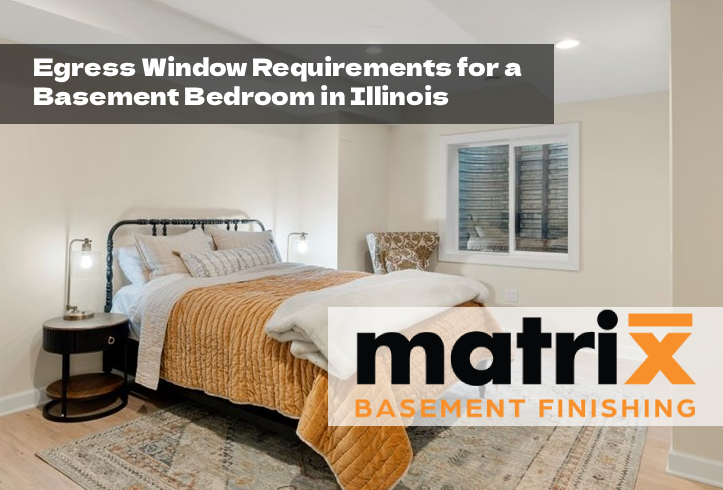
Planning to turn your lower level into a bedroom? Before choosing paint colors or furniture, it’s important to understand egress window requirements for a basement bedroom in Illinois. An egress window is designed to give occupants a safe way out—and emergency responders a way in—if stairs or interior exits are blocked.
Illinois requirements can vary by municipality, so homeowners should always confirm the final details with their local building department. However, most basement bedroom projects follow widely used emergency escape and rescue opening standards. Working with an experienced remodeler can help you plan the room, permits, window placement, and finish details correctly from the beginning.
Does an Illinois Basement Bedroom Need an Egress Window?
In most cases, yes. A basement room used for sleeping generally needs a code-compliant emergency escape and rescue opening. That opening may be an exterior door or a properly sized egress window. For many Illinois homes, especially finished basement projects, a window is the most practical solution.
If you are adding an extra bedroom in the basement, egress should be addressed early in the design process. The window location can affect the bedroom layout, window well, drainage, exterior grading, and how natural light enters the room.
Common Basement Egress Window Size Requirements
Although local amendments may apply, common egress window standards include:
- Minimum Net Clear Opening: At least 5.7 square feet of openable space
- Minimum Opening Height: At least 24 inches
- Minimum Opening Width: At least 20 inches
- Maximum Sill Height: No more than 44 inches above the floor
- Interior Operation: Must open from inside without keys, tools, or special knowledge
It’s important to understand that the “net clear opening” is not the same as the overall window size. A window can look large enough but still fail inspection if the openable area is too small.
What About Window Wells?
Because basement windows are often below grade, the window well matters just as much as the window itself. The well must allow the window to open fully and provide enough space for safe escape. If the well is deep, permanent steps or a ladder may also be required. Covers, grates, or screens should not prevent the window from opening easily from the inside.
A professional basement egress window installation can help address more than code dimensions. Proper excavation, drainage, wall cutting, waterproofing, and finish work all affect long-term performance.
Why Local Code Verification Matters
Illinois homeowners should avoid assuming that one statewide rule covers every basement remodel. Cities, counties, and villages may use different code editions, inspection processes, or permit requirements. Before construction begins, verify what your local authority requires for bedrooms, finished living areas, smoke alarms, electrical work, ceiling height, and emergency escape openings.
This is especially important if you are remodeling an older home. Existing small basement windows may not qualify, and adding a bedroom can trigger additional safety requirements.
Plan a Safer Basement Bedroom with Matrix Basements
Matrix Basements helps homeowners create finished lower-level spaces that feel comfortable, practical, and thoughtfully designed. Since basement bedrooms require careful planning, the right team can help you think through layout, safety, window placement, finishes, and the overall remodeling process.
Whether you are considering a guest suite, family bedroom, or flexible living area, Matrix Basements offers basement finishing services tailored to your home and goals. Schedule a free consultation to start planning a safer, more usable basement bedroom in Illinois.
Subscribe to Matrix Basements's Blog






Comments